
Colissimo remains the reference parcel service of La Poste for individuals and professionals. The accepted size and weight limits are not just a simple round number: they vary depending on the drop-off method, destination, and chosen delivery type. Understanding these thresholds helps avoid a refusal at the counter or an unexpected surcharge.
Maximum Colissimo weight according to the drop-off method: counter, mailbox, relay
The most well-known limit is 30 kg per parcel at the counter or at a postal contact point. This ceiling applies when you drop off your package at a post office or a relay point.
However, if you pay for postage online and drop the parcel directly into a mailbox, the maximum weight drops to 5 kg. The parcel must also physically fit in the mailbox, which effectively excludes most bulky shipments.
Another lesser-known restriction: for delivery to a pickup point (relay, Pick Up locker), the Colissimo documentation sets a maximum weight of 20 kg. A 25 kg parcel sent to a relay may therefore be refused, even if it remains under the 30 kg threshold.
To fully understand the maximum dimensions and weights of Colissimo parcels, one must reason based on the drop-off location and the delivery location, not just the gross weight.
- Drop-off at a post office or relay: up to 30 kg accepted
- Drop-off in a mailbox with online postage: maximum 5 kg, subject to bulkiness
- Delivery to a pickup point: limit reduced to 20 kg according to Colissimo conditions
Maximum Colissimo dimensions: length, perimeter, and non-standard parcels
Dimension constraints are as strict as weight constraints. A Colissimo parcel must not exceed 100 cm in maximum length on its longest side. The calculation of the overall size follows a precise rule: the sum of the length and the perimeter of the cross-section (width + height multiplied by two) must not exceed 150 cm in total.
A parcel that is 90 cm long and 35 cm wide by 25 cm high has a cross-sectional perimeter of 120 cm, totaling 210 cm. This package would be refused despite being less than one meter long. The apparent volume counts as much as the linear dimension.
Cases of flexible packaging and irregular shapes
Parcels with cylindrical shapes (tubes, rolls) or irregular shapes are measured at their longest dimension. A tube that is 95 cm long with a diameter of 15 cm easily passes the perimeter rule. Flexible bags, on the other hand, are often compressed for measurement: it is the dimension once compressed that is considered by the agent at the counter.
No official tolerance is published by La Poste for marginal exceedances. Field reports differ on this point: some offices accept a slight excess, while others systematically refuse.
Colissimo Overseas and international: differing limits
Sending a parcel to Martinique, Réunion, or Guadeloupe does not follow the same rules as a shipment within mainland France. Overseas and international destinations apply specific weight grids, with different pricing tiers.
The ceiling of 30 kg remains the upper limit for overseas shipments, but rates increase significantly beyond a few kilograms. For international shipments, the maximum weight varies according to the destination zone. Some areas outside Europe impose additional restrictions related to local customs regulations.
New European tax on small parcels since July 2026
Since July 1, 2026, a European tax applies to imports of goods from countries outside the European Union. This measure, aimed at restoring competitive fairness with non-European e-commerce platforms, modifies the final cost of received parcels, but not their dimensions. The available data does not yet allow for measuring the concrete impact on Colissimo shipment volumes internationally.
Ready-to-Send Colissimo packaging: predefined dimensions and weight constraints
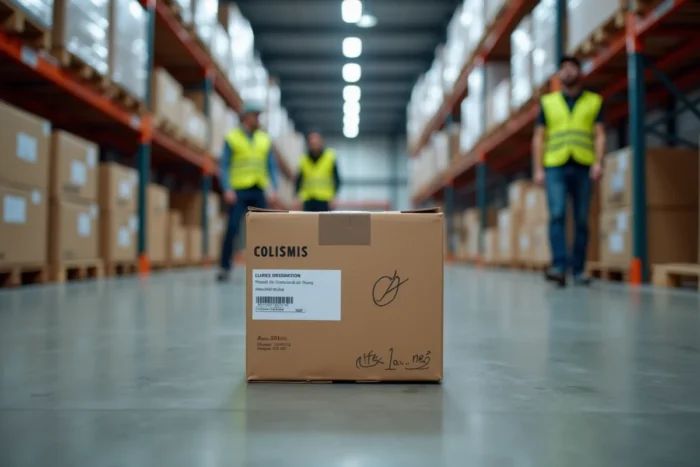
La Poste sells pre-paid packaging under the Ready-to-Send range. These boxes and envelopes simplify shipping: the rate is included, and the format is guaranteed to comply.
The trade-off is a weight limit specific to each format. Exceeding the weight indicated on the pre-paid packaging results in a refusal or an additional postage charge at the counter. Filling a Ready-to-Send box with books to the brim can easily exceed the allowed threshold.
- Soft envelopes: suitable for flat and lightweight items, weight limited to a few kilograms
- Rigid boxes: various formats, but the maximum weight is always below the standard limit of 30 kg
- Special packaging (bottles, fragile items): dimensions and weight constrained by the integrated protective format
Online verification and postage: avoid refusal at drop-off
The Colissimo online space allows you to enter the dimensions and weight of the parcel before postage. This entry step generates the corresponding label and calculates the rate. A declaration error (underestimated weight, rounded-down dimensions) can lead to a refusal at the time of drop-off or an additional charge.
The weighing machines available at post offices measure the actual weight. In case of a discrepancy with the prepaid label, the agent may request a supplement. The weight declared online must correspond to the actual weight of the packaged parcel, including cushioning accessories.
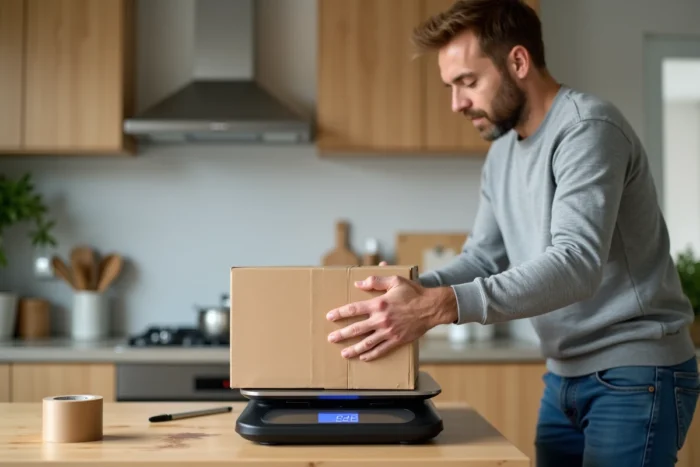
For regular shippers, the most reliable method remains to weigh and measure the finalized parcel before any online entry. A kitchen scale is sufficient for small shipments, but beyond a few kilograms, a dedicated parcel scale reduces the risk of error. The size can be checked with a tape measure by applying the formula length + cross-sectional perimeter.