After a dozen outings by the water, memories start to blend together. Which spot had worked on that windy May morning? What size of boilie had triggered bites on that pressured water? Following and optimizing your fishing sessions relies on a simple principle: transforming scattered observations into concrete decisions for the next outing.
Documenting Your Fishing Sessions to Make Better Decisions
Most anglers keep a general impression of their outings in mind. The problem is that memory distorts, filters, and forgets. After several months, it becomes impossible to distinguish what was luck and what constituted a true reproducible pattern.
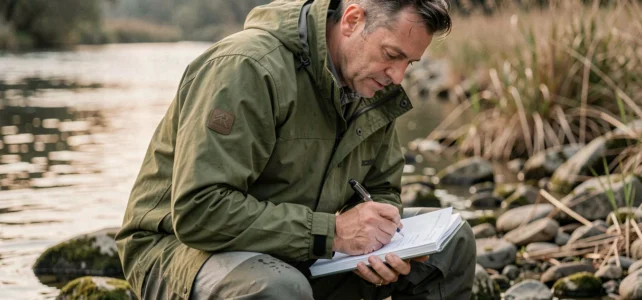
A fishing journal corrects this bias. It’s not about writing a novel after each outing, but rather noting a few targeted data points right after the session, when the details are still fresh. The goal is to create a database that you can review before your next outing on the same body of water or under similar conditions.
Several anglers share their experiences on the My Fish Book homepage, which gives a concrete idea of the diversity of possible approaches to record and compare their sessions.
Five minutes of notes after each outing are worth more than two hours of reflection before the next one. The key is consistency, not completeness.
The Information That Really Matters
Writing everything down is counterproductive. You’ll give up after three sessions. Focus on what truly influences your results:
- The exact spot (not just the name of the lake, but the bank, distance, and depth probed) and the type of bottom if you’ve surveyed it.
- The weather conditions at the time of the bites, not just upon arrival: wind direction, atmospheric pressure if you have a barometer, estimated or measured water temperature.
- The bait used (model, size, color, type of rig) and the baiting technique employed, with the approximate quantity.
- The concrete result: number of bites, runs, fish landed, and especially the precise timing of each event.
This last point is often overlooked. The timing of bites, cross-referenced with conditions, reveals recurring windows that intuition alone does not capture.
Fishing Pressure and Spot Choice: Adapting Your Strategy to the Terrain
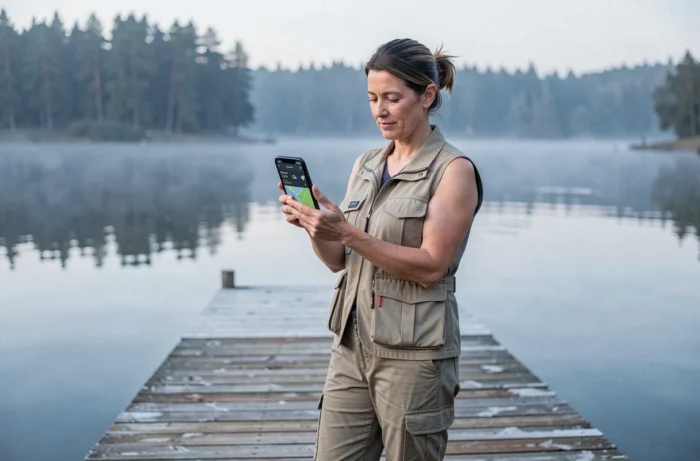
You’ve probably noticed that the most accessible spots are often the least productive? In a frequented body of water, fish learn. They associate certain areas with danger. Fishing pressure alters fish behavior more than distance or depth.
Rather than trying to cast further and further, the current trend among experienced anglers is to reason based on the level of traffic on the water. In heavily pressured waters, presentation stealth takes precedence over distance. Line pinned to the bottom, use of backleads to pin the line down, limiting recasts: these technical details make the difference.
Breaking Up the Session Instead of Camping
The classic approach is to settle on a spot and stay there all day. In some waters, this strategy works. In others, it amounts to waiting for a fish that will never pass by.
Breaking your session into several phases of prospecting allows you to adapt to fish movements. Specifically, this means spending the first hour observing (showing, bubbles, jumps), then settling on the most promising spot for two or three hours. If nothing happens, change areas instead of multiplying casts in the same spot.
This phase-based approach is particularly suited for daytime fishing, where available time is limited. The fishing journal then makes perfect sense: by rereading your notes on a given body of water, you identify the time slots when bites occurred and focus your effort on those windows.
Adapting Your Approach to the Duration of the Session
A four-hour session is not prepared the same way as a full weekend by the water. Tactics that work for a long session (massive baiting the day before, setting up a bivvy, methodical prospecting of several spots) become unsuitable when time is limited.
For a short outing, baiting must be immediate and targeted. Small baits scattered over a restricted area attract fish faster than large boilies spaced out. The logic is simple: more items on the ground means more digging time for the fish, thus increasing the chances they’ll come across the bait.
In a long session, patience pays off more. You can afford to bait an area without fishing it for several hours, then place your rods once the fish are settled. This type of tactic requires planning your session in advance, which brings us back to the fishing journal: your previous notes on this body of water indicate the usual delay between baiting and the first bites.
Reviewing Your Notes Before Fishing: The Loop That Drives Progress
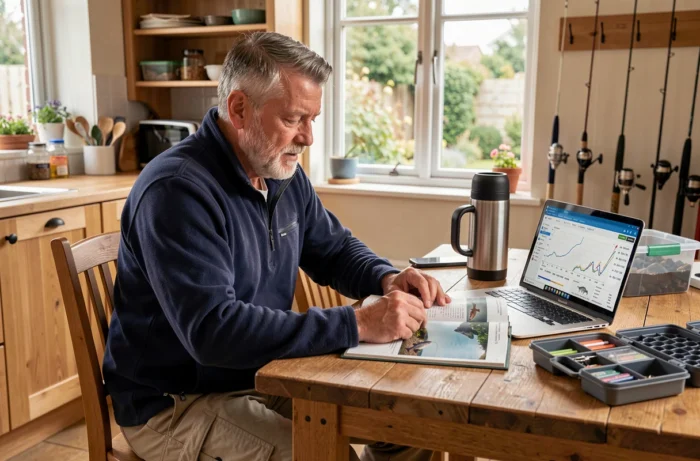
A fishing journal that sits in a drawer is useless. The step that transforms notes into a concrete advantage is reviewing them before each outing.
Before returning to a body of water, take five minutes to reread your last two or three sessions at that location. Look for patterns: do bites always occur during the same time slot? Did the prevailing wind direct fish towards a particular bank? Did a type of bait consistently appear in successful sessions?
These cross-references allow you to leave with a plan instead of improvising. You choose your spot, your time slot, and your rig based on past observations, not on a reflex or habit.
The best equipment does not replace good terrain reading. A high-end reel does not correct a poor spot choice. However, a well-kept notebook, even if hastily scribbled, directs every decision towards something concrete. Progress in fishing is built session by session, provided you keep a record of each one.