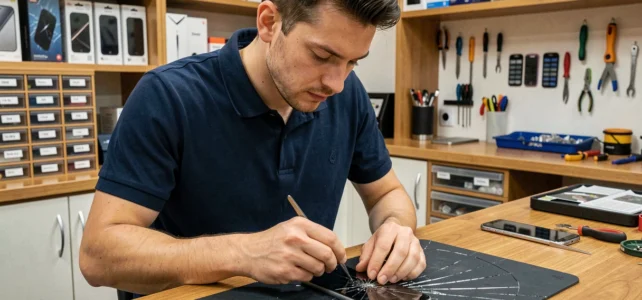
A cracked screen, a temperamental charging port, or a battery that dies in the middle of the day: smartphone breakdowns often lead to a search for a quick solution. Online repair services are multiplying, but not all operate in the same way. The real issue is not just speed: it’s the reliability of the diagnosis made remotely, the transparency of the quote, and the protection of your personal data throughout the operation.
Remote Diagnosis: What Separates a Good Online Service from an Empty Form
Have you ever filled out an online repair form that only asked you to “describe your problem”? This type of interface does not allow for a real diagnosis. A serious service asks specific questions about the exact model of the phone, the circumstances of the breakdown, and the observed symptoms.
The difference lies in the repairer’s ability to guide their diagnosis even before receiving the device. Some platforms offer a video call or chat with a technician who guides the user through a series of simple tests: forced restart, checking safe mode, testing touch sensitivity in several areas of the screen.
A precise diagnosis before shipping reduces the risk of inflated quotes upon receipt. If the service does not offer any pre-diagnostic steps and merely asks for the phone to be sent, you have no control over what will be charged later. For those who want to discover the Mobile Junky service, the online process allows for framing the problem before any intervention.
A rarely discussed point: microsoldering. This technique allows for the repair of certain motherboard failures without replacing the entire module. Not all online services master it. If your smartphone has a backlight, charging, or signal issue, explicitly ask if the repairer has this skill. It’s a reliable indicator of their technical level.

Smartphone Spare Parts: Understanding What You’re Really Getting
The quality of a repair directly depends on the part installed. The problem is that the terms used by online repairers do not all mean the same thing.
- Original manufacturer part: made by (or for) the phone brand. This is the best guarantee of compatibility, but also the most expensive.
- Compatible part: made by a third party, designed to fit the relevant model. Quality varies greatly from one supplier to another.
- Refurbished part: recovered from an existing device, tested, and then put back into service. Cheaper, but its lifespan depends on the initial condition of the component.
A reliable repair service clearly displays the origin of the part on the quote before validation. If this information appears only in small print or not at all, it’s a warning sign. Demand to know the exact type of part before accepting a quote.
Online Quotes for Phone Repair: Traps to Spot
The quote is the moment when trust is built or destroyed. Online, the distance makes this exercise riskier than in-store.
A serious quote includes the price of the part, the cost of labor, and return shipping fees. These three lines must be visible before you send your device. Beware of phrases like “starting from” without a specified cap: they leave the door open for a final bill that is much higher.
A firm and detailed quote protects against unannounced extra costs. Also check what happens if the repairer discovers an additional fault after opening the phone. The service must contact you for validation before proceeding, not charge automatically.
Another concrete point: the quote must specify the warranty duration on the repair. A warranty of at least a few months on the part and labor is a reasonable standard. Below that, the repairer is not really committing to their work.
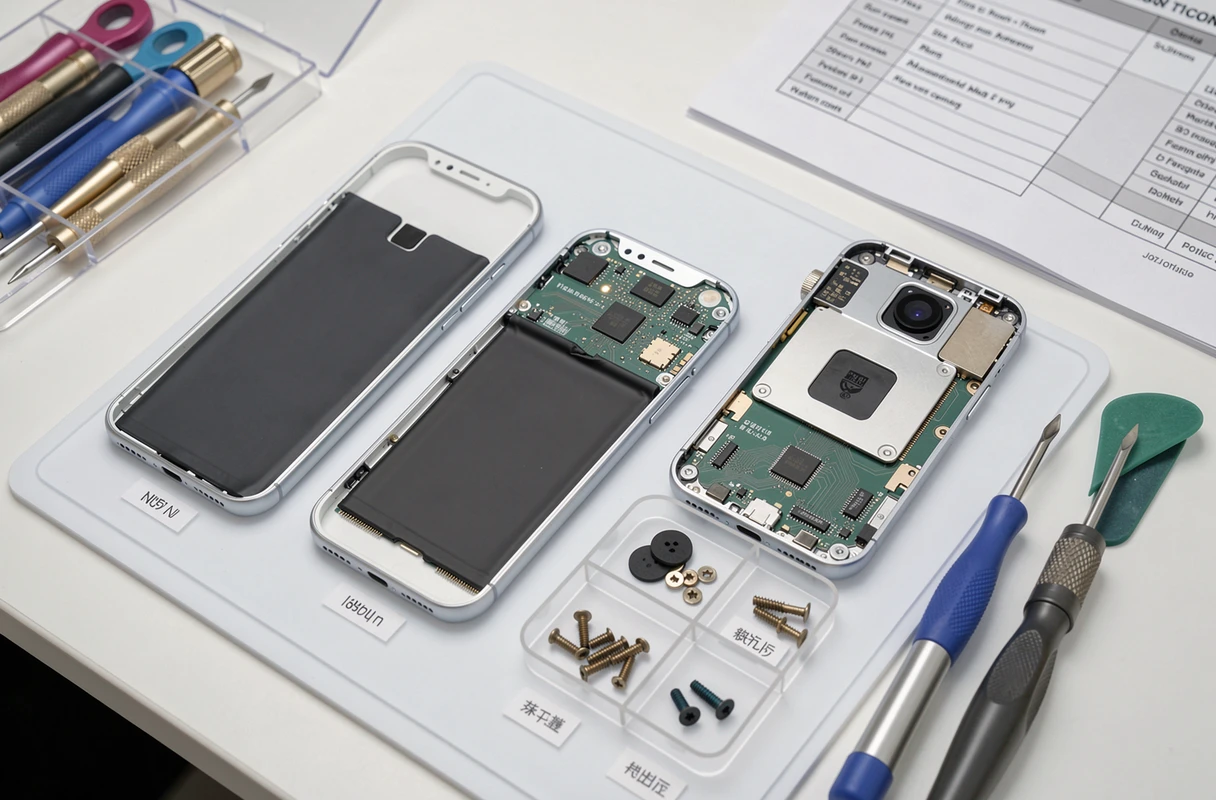
Protection of Personal Data During Repair
Sending your smartphone to a repairer potentially gives them access to your photos, messages, banking apps, and passwords. This aspect is often overlooked when comparing online services.
Before shipping your phone, a few precautions are necessary:
- Back up your data to a cloud or computer, then perform a factory reset if the fault allows.
- Remove the SIM card and memory card if your device has one.
- Disable account lock (FRP on Android, Find My on iPhone) so the technician can test the device without accessing your personal data.
On the repairer’s side, a reputable professional commits in writing not to access personal content. Some services mention a privacy policy or a device handling protocol. The complete absence of mention on this subject in the terms and conditions should alert you.
QualiRépar Label and Authorized Repairer: What It Means for the Consumer
The QualiRépar label identifies repairers who adhere to a specific set of requirements regarding skills, traceability of parts, and pricing transparency. For the consumer, using a labeled repairer may condition access to a repair bonus, which is a financial aid that reduces the cost of the intervention.
This label does not guarantee that the repairer will be the cheapest or the fastest. It guarantees a foundation of verifiable practices. For recent smartphones still under manufacturer warranty, going through an authorized repairer (Apple, Samsung) may sometimes be the only option to maintain that warranty.
Check the status of the repairer before sending a phone still under warranty. An intervention by an unauthorized professional can void the manufacturer’s coverage, even if the repair is well done.
Ultimately, the choice of an online repair service rests on three verifiable pillars: the rigor of the diagnosis before shipping, total transparency of the quote (parts, labor, warranty), and a clear commitment to data confidentiality. A repairer who meets these three conditions deserves to be entrusted with your device, whether they are labeled or not.