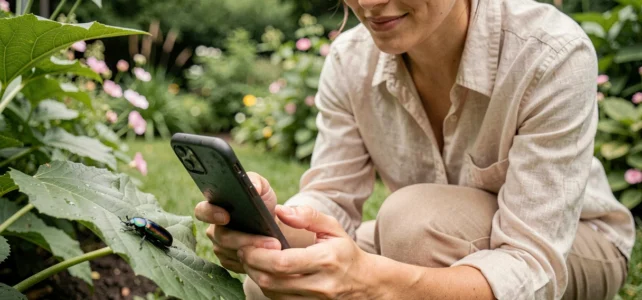
Identifying an insect from a simple photo taken with a smartphone relies on computer vision models whose performance varies depending on the application, the targeted taxonomic group, and the shooting conditions. Comparing these tools requires looking beyond the ratings on app stores: database used, mode of operation (AI alone or community validation), actual reliability in the field, and data privacy policy.
Taxonomic Biases of Insect Identification Apps
Not all applications recognize insects with the same accuracy depending on the family concerned. A 2026 study on the use of iNaturalist in agroecology, based on over 12,000 insect observations, shows that identifications reach the species level much more often for Hymenoptera (bees, wasps) than for many flies or beetles.
The species Apis mellifera (honeybee) accounts for a disproportionate share of correct observations. This imbalance is explained by the composition of training datasets: the groups most photographed by contributors are also the best recognized by the algorithm. Discreet, small, or hard-to-distinguish insects remain largely underrepresented.
Choosing an app to recognize insects therefore requires knowing which order or family you encounter most often, as the accuracy of the tool directly depends on the volume of data available for that specific group.
Comparison Table of Major Identification Apps
| Application | Identification Model | Database | Availability | Cost |
|---|---|---|---|---|
| iNaturalist | AI + community validation | Open, collaborative (several million observations) | iOS, Android | Free |
| Seek (by iNaturalist) | Embedded AI, no account required | Same database as iNaturalist, local identification on the device | iOS, Android | Free |
| Picture Insect | AI (Next Vision Limited neural network) | Proprietary | iOS, Android | Free with in-app purchases |
| Obsidentify | AI + naturalist community | Collaborative (focused on European fauna) | iOS, Android | Free |
The most discriminating factor is not the raw size of the database, but the taxonomic coverage for your geographical area. iNaturalist and Obsidentify benefit from a community of naturalists that corrects automatic identifications, improving reliability over time.
Real-World Accuracy vs. Advertised Results
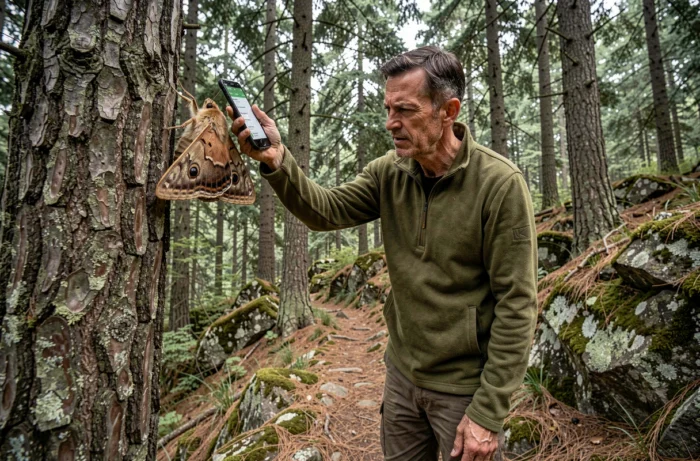
Product sheets and technical releases highlight spectacular accuracy rates. In laboratory settings, computer vision models applied to insects indeed achieve very high levels. However, performance drops with photos taken with smartphones in real-world conditions: variable lighting, imperfect angles, insects partially hidden behind leaves.
A structured review of the literature on computer vision applied to insects confirms that studies systematically report lower accuracy when images come from phones. The gap between marketing demonstration and everyday use constitutes the main trap for users who trust the result without verification.
Factors That Degrade Recognition
- Insufficient brightness or backlighting: the algorithm loses details of wing patterns or antennae, elements often crucial for distinguishing two closely related species
- Distance and sharpness: an insect photographed from too far away or in motion produces a blur that the model does not compensate for, even with a good sensor
- Rare or poorly documented species: if the insect appears in only a few dozen photos from the training database, the result will be an approximate suggestion, often at the genus level rather than the species
- Larval or nymph stage: most databases are built from adults, making the identification of caterpillars or larvae significantly less reliable
Personal Data and Privacy of Insect Apps
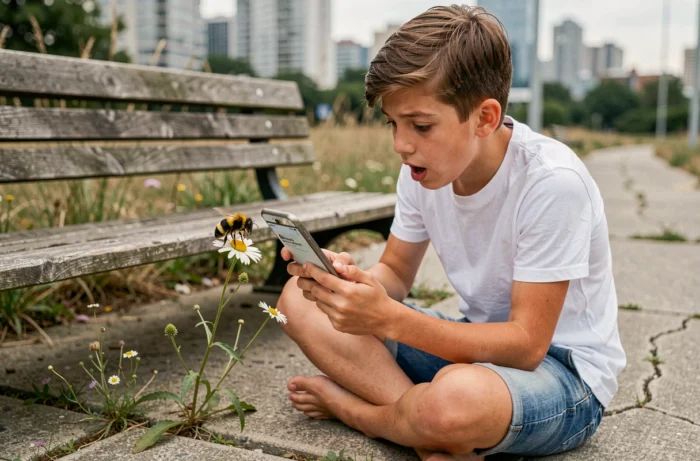
Choosing an application goes beyond the quality of identification. The handling of personal data varies greatly from one publisher to another. Seek, developed by iNaturalist, stands out for identification performed directly on the device, without sending photos to a remote server. No user account is required, which limits data collection.
In contrast, Picture Insect, published by Next Vision Limited, operates on a freemium model with in-app purchases. Its terms of use provide for data sharing with third parties for advertising purposes. For users concerned about their privacy, open-source or local processing applications offer a clear advantage.
Community Validation or AI Alone
Validation by a community of naturalists, like that of iNaturalist, adds a layer of control absent from purely automated tools. When an observation is confirmed by several qualified contributors, it reaches “research” status, usable by scientists. This mechanism corrects algorithm errors and enriches the database for future identifications.
Applications without a community component return a fixed result. If the AI makes a mistake, no correction mechanism intervenes, and the user leaves with a potentially erroneous identification without knowing it.
The most reliable criterion for choosing your application remains the presence of a human review system. A high-performing algorithm combined with an active community produces results significantly more accurate than an isolated AI, regardless of the score displayed on the store listing.