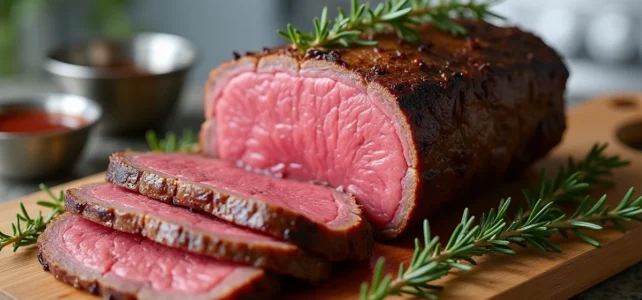
A roast beef cooked the day before rarely loses its flavor. It loses texture. The problem comes from poorly controlled heat, which continues cooking instead of simply bringing the meat back to temperature. Reheating a roast beef without drying it out relies on a simple principle: limit exposure to excessive heat and protect the muscle fibers from evaporation.
Slicing at the last moment: the reflex that changes everything when reheating roast beef
Have you ever noticed that a piece of roast beef sliced the day before seems drier than the whole piece, even when stored in the refrigerator? That’s normal. Each cut exposes new surfaces to the air, and oxidation accelerates moisture loss.
Keeping the whole, uncut piece until serving time radically changes the outcome. The inside remains protected by the outer crust, which acts as a natural barrier against drying out. This detail, often overlooked in reheating guides, makes the difference between juicy roast beef and dry meat in the mouth.
Specifically, wrap your roast beef in aluminum foil or plastic wrap as soon as it has cooled. Place it in the refrigerator without cutting it. The next day, knowing how to reheat roast beef without recooking it will be much easier with an intact piece than with individual slices.
If you have no choice and the roast beef is already sliced, layer the slices in a dish and add a bit of cooking juice or a splash of broth. The liquid partially compensates for the moisture lost by the exposed surfaces.
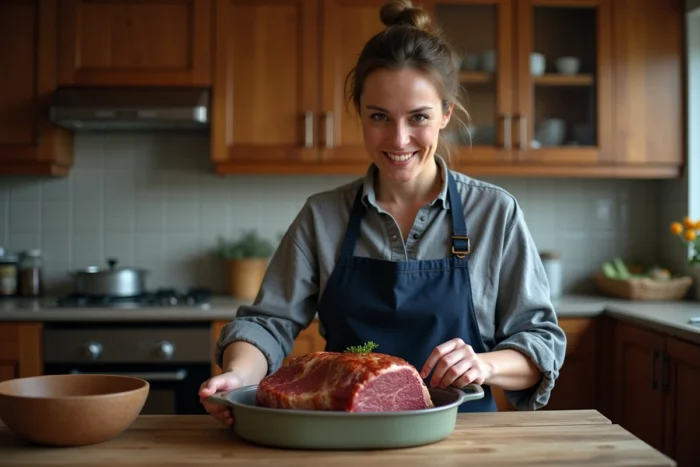
Reheating roast beef in the oven at low temperature: the most reliable method
The oven remains the most suitable tool for reheating a whole piece of roast beef. The key is the temperature. Too high, it restarts the cooking process. Too low, the meat takes too long to reach a pleasant warmth in the mouth.
The right temperature range for already cooked roast beef
For reheating without overcooking, set your oven between 150 and 160 °C. This range is sufficient to bring the meat to serving temperature without the outside turning into a cardboard crust.
Place the roast beef in an oven-safe dish, covered with a sheet of aluminum foil. The aluminum traps steam and creates a humid micro-environment around the meat. If you have the original cooking juice, pour a few spoonfuls at the bottom of the dish before putting it in the oven.
Count on a reheating time proportional to the size of the piece. A small leftover reheats in about twenty minutes, while a larger piece may take longer. Monitor the meat: as soon as it is warm in the center, remove it. Every additional minute in the oven raises the internal temperature and brings your roast beef closer to medium or even well done.
Why to avoid temperatures above 180 °C
Beyond this limit, the fibers contract quickly and expel their water. It’s the same mechanism as during the initial cooking. The result: you are not reheating, you are recooking your roast beef. An oven that is too hot for a few minutes causes more damage than a gentle oven for half an hour.
Alternatives to the oven: skillet, steam, and water bath for reheating slices of roast beef
The oven is perfect for a whole piece. For already sliced pieces, other methods offer better control.
Reheating in a skillet without drying out
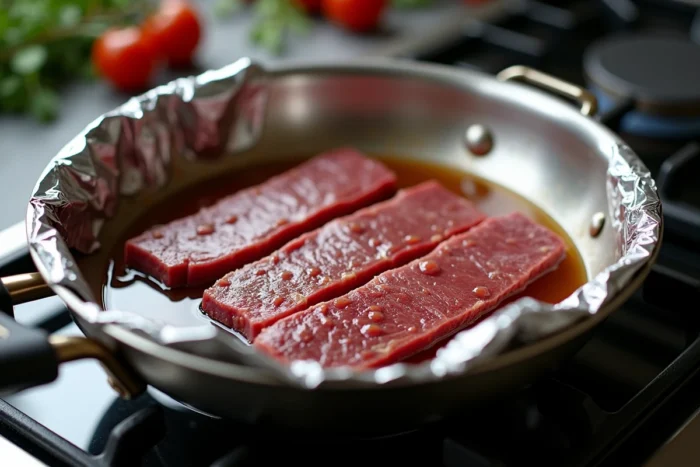
Heat a skillet over medium heat with a bit of fat (butter or olive oil). Place the slices and turn them after just a few seconds. The goal is not to sear the meat, but to warm it up.
- Add a spoonful of broth or cooking juice to the skillet to create steam and hydrate the slices during reheating.
- Do not cover the skillet with a lid for too long: excess steam softens the surface of the roast beef and gives it a cottony texture.
- Remove the slices as soon as they are warm to the touch, not hot. The residual heat continues to rise for one to two minutes after leaving the skillet.
The water bath: the gentle method par excellence
Place the slices of roast beef in a sealed bag, removing the air. Submerge the bag in a pot of hot water (not boiling). The water temperature should never reach boiling point.
This technique, similar to what restaurateurs use to keep meats warm, transmits heat evenly and very gradually. The roast beef does not exceed the temperature of the water, making overcooking nearly impossible. It is the safest method if you want to maintain a medium-rare cooking.
Common mistakes that dry out reheated roast beef
Some common reflexes worsen the problem instead of solving it.
- The microwave reheats unevenly: the edges cook while the center remains cold. If you have no other option, use low power and short intervals, turning the meat between each pass.
- Reheating meat directly from the refrigerator forces the appliance (oven, skillet) to compensate for a larger temperature gap. Take the roast beef out about thirty minutes beforehand to bring it closer to room temperature.
- Forgetting to add liquid to the reheating dish. A bit of juice, broth, or even water in the container is enough to maintain a moisture level that protects the fibers.
Reheating a roast beef is not technical in itself. Keeping the piece whole, choosing a moderate temperature, and adding a bit of liquid cover the vast majority of situations. The only real mistake would be to treat already cooked roast beef like raw meat to be cooked: time and heat must remain below what the first cooking has already done.