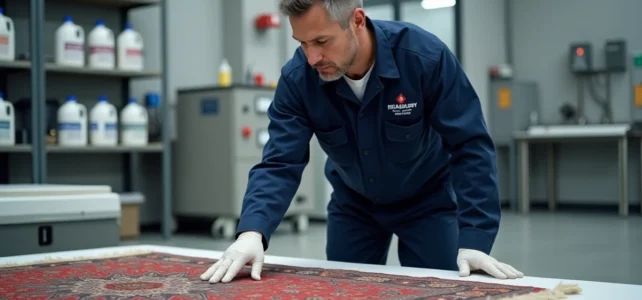
The cleaning of a carpet at a dry cleaner relies on standardized industrial processes: controlled immersion, dosed solvents or detergents, machine drying. At 5 à Sec, the service varies according to the surface, material, and level of soiling of the carpet. Before dropping off a carpet at the counter or calling an independent cleaner, it’s better to understand what each option entails in terms of technique, result, and risk to the fiber.
Hot water extraction or dry cleaning: how the method changes the result
The term “dry cleaning” can be misleading. Most dry cleaners, including 5 à Sec, use organic solvents or perchloroethylene-based solutions to dissolve grease without soaking the fiber. This technique is suitable for fine or delicate carpets, particularly those made of silk or viscose, which deform with prolonged contact with water.
The alternative, more common among specialized professionals, is hot water extraction under pressure. A device injects water mixed with a detergent into the fiber, then vacuums up the dirt-laden mixture. This process removes more embedded dust and allergens than solvent cleaning.
The difference in results is clear on long-pile carpets or thick wool pieces. A solvent degreases the surface but does not dislodge particles trapped deep within. Wet extraction, on the other hand, reaches the base of the pile. The drying time is longer (sometimes more than twenty-four hours), which explains why general dry cleaners prefer the quicker dry method, which is easier to manage in a tight workflow.
For those comparing options, a detailed article helps to better situate the carpet cleaning price at 5 à Sec compared to home or specialized workshop services.

General dry cleaner or specialized carpet cleaner: concrete selection criteria
A dry cleaner like 5 à Sec handles large volumes of various textiles: clothing, curtains, duvets, carpets. Carpet cleaning is not their core business. The staff follows a standardized protocol suited to common cases but is rarely calibrated for a hand-knotted Berber carpet or an antique kilim.
A professional specializing in carpet cleaning typically conducts a fiber-by-fiber diagnosis before treatment. Wool, cotton, jute, silk, and synthetic fibers do not react the same way to chemicals or water pressure. An incorrect dosage of alkaline detergent on wool can cause irreversible felting.
Here are the criteria to check before entrusting a carpet:
- The nature of the fiber is identified by the provider before cleaning begins, not just declared by the customer at the counter.
- The method used (solvent, injection-extraction, steam) is appropriate for the material and clearly communicated.
- The provider indicates stains that are unlikely to come out, rather than promising guaranteed results on all soiling.
- Drying is done flat or on a frame to avoid deformation, not suspended like a curtain.
At a general dry cleaner, these precautions sometimes exist, but the production flow does not always allow for thorough individual examination. The risk of damage increases on handmade or antique pieces, whose vegetable dyes do not tolerate chlorinated solvents well.
Chemicals and carpet maintenance: the environmental question in dry cleaning
Perchloroethylene, the historical solvent for dry cleaning, is subject to increasing restrictions due to its toxicity to workers and its impact on groundwater. Several cleaning companies are developing alternative processes, using biodegradable detergents and reduced water consumption.
This transition also affects public markets. Starting August 21, 2026, the Climate and Resilience Law requires the inclusion of at least one environmental criterion in all public contracts, including those related to cleaning premises. Local authorities that outsource the maintenance of their carpets now demand traceable and less polluting methods.
This regulatory shift has an indirect effect on individuals: providers who invest in “green” equipment pass this additional cost onto their prices. Cleaning with ozonated water or plant-based surfactants costs more than a traditional cycle with perchloroethylene. The trade-off is a rinse without chemical residue on the fiber, which extends the carpet’s lifespan and reduces allergy risks upon contact.
Home carpet cleaning: the limits of washing without professional equipment
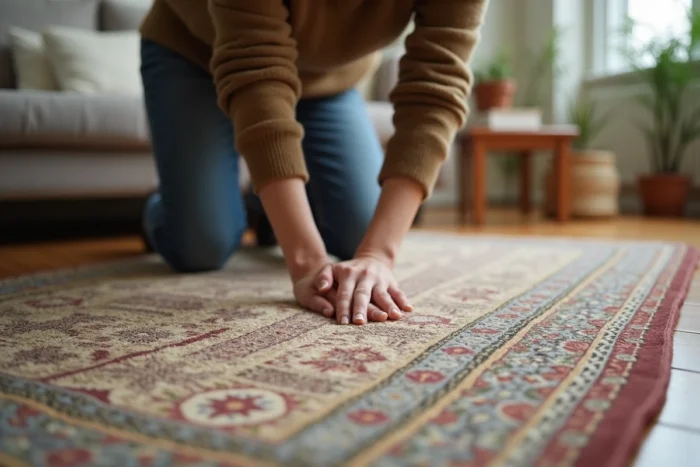
Regular vacuuming and treating occasional stains with white vinegar or Marseille soap remain an effective maintenance base between professional cleanings. The problem arises when a carpet has not been deeply cleaned for several years.
Without an injection-extraction machine, it is difficult to remove the dust accumulated at the base of the fibers. A household vacuum, even powerful, acts only on the surface. The portable steam used at home generally does not reach the necessary temperature or pressure to disinfect a thick carpet.
- A wool carpet washed with a lot of water in a bathtub takes several days to dry, with a risk of mold at the heart of the fiber.
- Commercial stain removers often contain bleaching agents that alter the colors of natural dyes.
- Mechanical brushing, if too vigorous, breaks wool fibers and creates irreversible bald spots.
Home washing is suitable for small synthetic carpets that are easily handled and resistant to common detergents. For a piece made of wool, blended silk, or any carpet larger than two square meters, relying on an equipped cleaner remains the safest solution.
The choice between a general dry cleaner and a specialized professional ultimately depends on the carpet itself. A machine-made polypropylene carpet can withstand a cycle at 5 à Sec without damage. A hand-knotted carpet dyed with indigo or henna deserves a workshop that adapts its protocol to each piece. Checking the proposed cleaning method before signing remains the most protective reflex for both the fiber and the wallet.