
The sanction imposed on Lance Armstrong by USADA in 2012 remains one of the heaviest in sports history: lifetime ban from competition and disqualification of his results from August 1998, including his seven Tour de France titles. As of 2026, this ban has not been subject to any review, no ongoing appeal process, and no adjustments by the UCI. The confusion between media presence and sports rehabilitation fuels a recurring, but legally unfounded, debate.
UCI Lifetime Ban: What the World Anti-Doping Code Actually Provides
A lifetime suspension issued under the World Anti-Doping Code does not include an automatic review clause. For Armstrong to compete again in a discipline sanctioned by the UCI, there would need to be either a decision from the Court of Arbitration for Sport overturning the initial sanction or a substantial amendment to the World Anti-Doping Code introducing a rehabilitation mechanism for cases of aggravated doping.
Neither of these two scenarios is on the agenda. The UCI reaffirmed in August 2026 its support for the controls of the ITA (International Testing Agency) and its commitment to a “cleaner and more credible” anti-doping fight. This tightening of the context makes any institutional leniency even less likely.
When analyzing Lance Armstrong’s future in 2026, the conclusion is clear: his legal situation has not changed one bit since 2012. The ban covers all competitions sanctioned by a federation that is a signatory to the World Anti-Doping Code, not just road cycling.
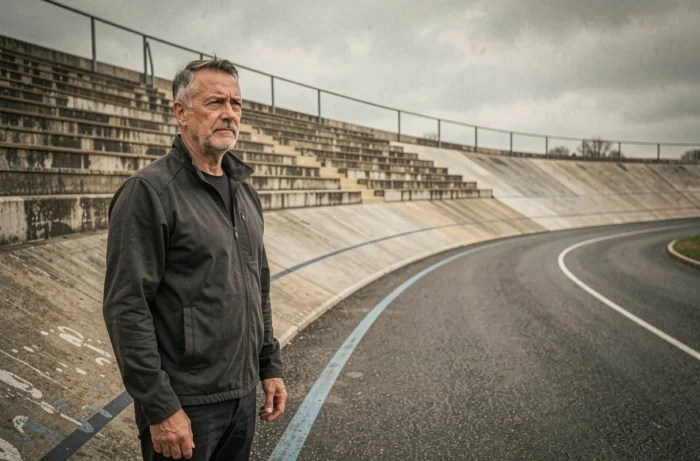
Armstrong in 2026: Media Commentator, Not Sports Actor
Armstrong’s presence around the peloton in 2025 and 2026 has fueled the idea of a “return.” In reality, his role is limited to that of a commentator and media personality. He appears on podcasts, participates in charity events related to Livestrong, and publishes analyses on ongoing races.
These statements are those of a former rider turned media figure, not of an athlete seeking reintegration.
Armstrong cannot hold any official position within a UCI WorldTour team, neither as a sports director nor as an accredited technical consultant. His sanction also covers coaching roles within structures affiliated with signatory federations.
What His Media Presence Changes for Cycling
The question divides the American peloton. Some former riders believe that “certain things need to be set aside,” while others argue that his media visibility sends a contradictory signal regarding the credibility of the anti-doping fight.
The issue is not that Armstrong talks about cycling. The issue is that each appearance reignites a debate that overshadows the real progress of the anti-doping system.
Anti-Doping Controls in 2026: A Toughening That Makes Any Return Impossible
The UCI issued an official statement in August 2026 supporting the nighttime anti-doping controls conducted during the Tour de France. Presented as an exceptional measure reserved for limited and justified circumstances, these nighttime tests mark a turning point in the rigor of the system.
- The ITA (International Testing Agency) now manages controls independently, reducing historical conflicts of interest between the UCI and teams
- Nighttime controls, although controversial, address a gap identified in the detection protocols for certain short half-life substances
- The UCI’s public support for these measures reflects a desire to leave no room for ambiguity, including symbolically
In this context, any hypothesis of rehabilitation for a rider banned for life for systematic doping would run counter to the current institutional policy. The anti-doping system is tightening, not loosening.

Why Armstrong’s Name Comes Up Every Summer During the Tour de France
Cycling remains the sport where doping has caused the most visible rift between a champion and his record. Every summer, the Tour de France reactivates this collective memory. The exceptional performances of current riders, particularly those of Pogacar, systematically trigger comparisons with the Armstrong era.
This mechanism is not trivial. It reveals a structural distrust from part of the public towards peak performances in cycling. When a rider dominates spectacularly, the question “is he clean?” almost automatically arises, and Armstrong’s name serves as a historical shortcut.
An Legacy That Weighs on the Current Peloton
Riders in 2026 have nothing to do with cycling from the EPO era. Biological monitoring protocols, biological passports, and cooperation between the ITA and national anti-doping agencies provide an unprecedented level of oversight. The watts produced by today’s best climbers are subjected to detailed public analyses, which did not exist during Armstrong’s time.
- The biological passport allows for longitudinal tracking of each rider’s blood parameters
- Power data is published and analyzed by independent experts after each major race
- The independence of the ITA from the UCI reduces the risk of institutional complacency
Armstrong will not return to competition. His sanction is final, the legal framework provides no mechanism for clemency, and the UCI has no political interest in reopening this case. The real issue in 2026 is not his potential return, but the ability of cycling to build its credibility without being held captive by its past.